
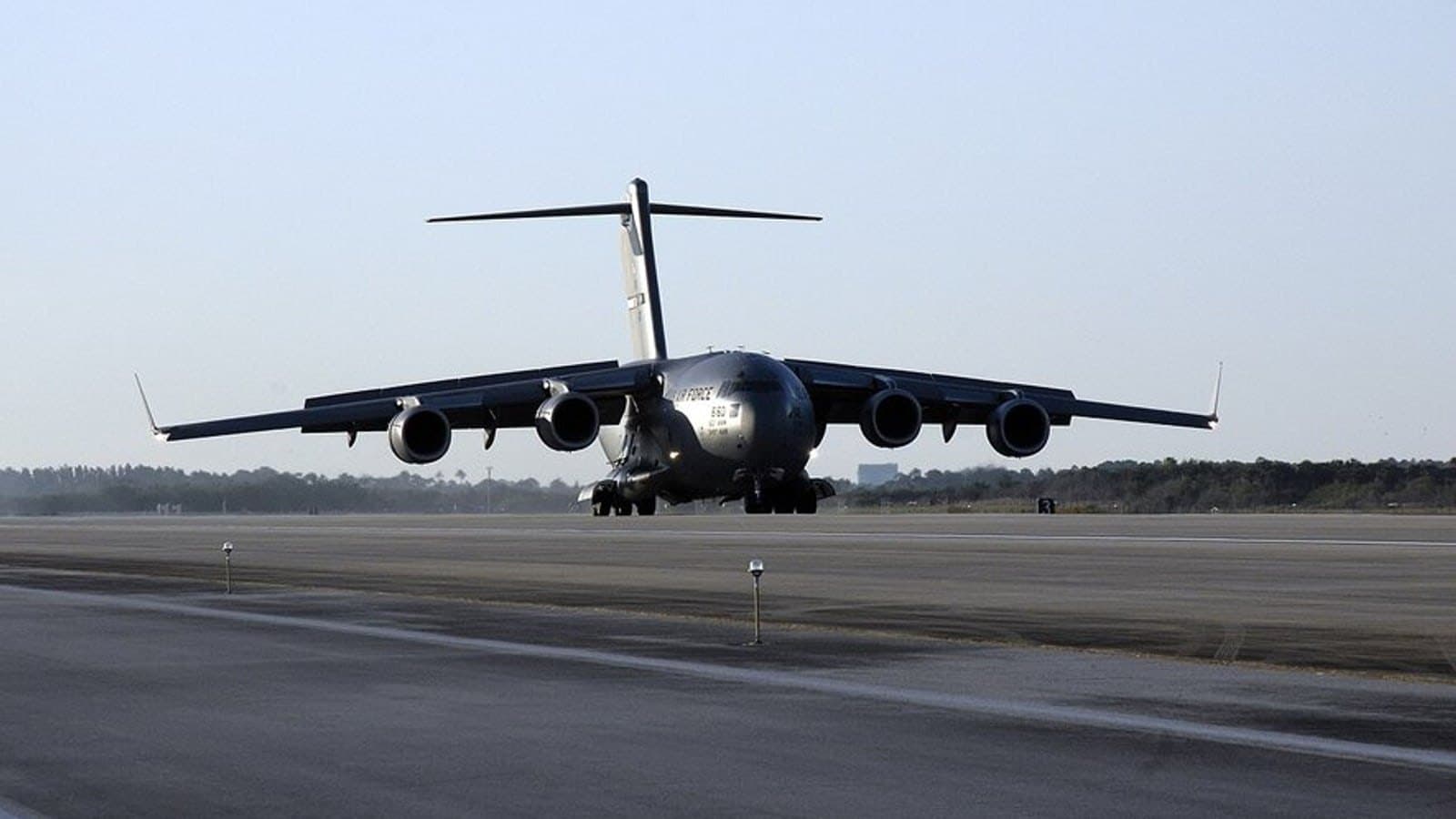
A Boeing C-17 Globemaster III of the Royal Australian Air Force landed at Toulouse-Blagnac on Wednesday, which is not a routine sight on that apron and was quickly noticed by the local aviation spotters who photographed it. The explanation, relayed by a Toulouse spotter and member of the Spotair association, is that the aircraft is one of two Australian C-17s carrying helicopters sent by Australia to help fight the fires that have burned across the Gironde.
Before reaching Toulouse it had unloaded one of those helicopters at air base 118 at Mont-de-Marsan, in the Landes. It did not stay there. At more than 53 metres long with a wingspan of close to 52 metres, the C-17 is among the largest military transports in service, and the base did not have room to park it, so it came to Toulouse for the night and left the following day.
That is a small logistical detail and it is the interesting one. An aircraft designed to put heavy equipment into places with minimal infrastructure still needs a very large piece of concrete once it is on the ground and empty. Delivering aid by strategic airlift is not only a question of whether a country will send help. It is a question of whether the receiving side has the ramp space, the fuel and the handling to absorb an aircraft of that size in the middle of an emergency, which is why aid airlifts routinely end up at civil airports some distance from where the cargo is actually needed.
The wider point is what the flight represents. Two helicopters arriving from Australia means France has drawn on the far end of the international firefighting network, and the fact that Australian aircraft are available in August is a consequence of hemispheres: their fire season runs against Europe's. That complementarity has been the basis of aerial firefighting cooperation for years, with crews and machines moving between the two halves of the year. It works precisely as long as the two seasons stay out of phase.
For Toulouse it was a night on the tarmac and a good afternoon for anyone with a camera at the fence. For the fire effort it was the last leg of a delivery that started on the other side of the world, and the sort of movement that only shows up in public when the aircraft is too big to hide.