
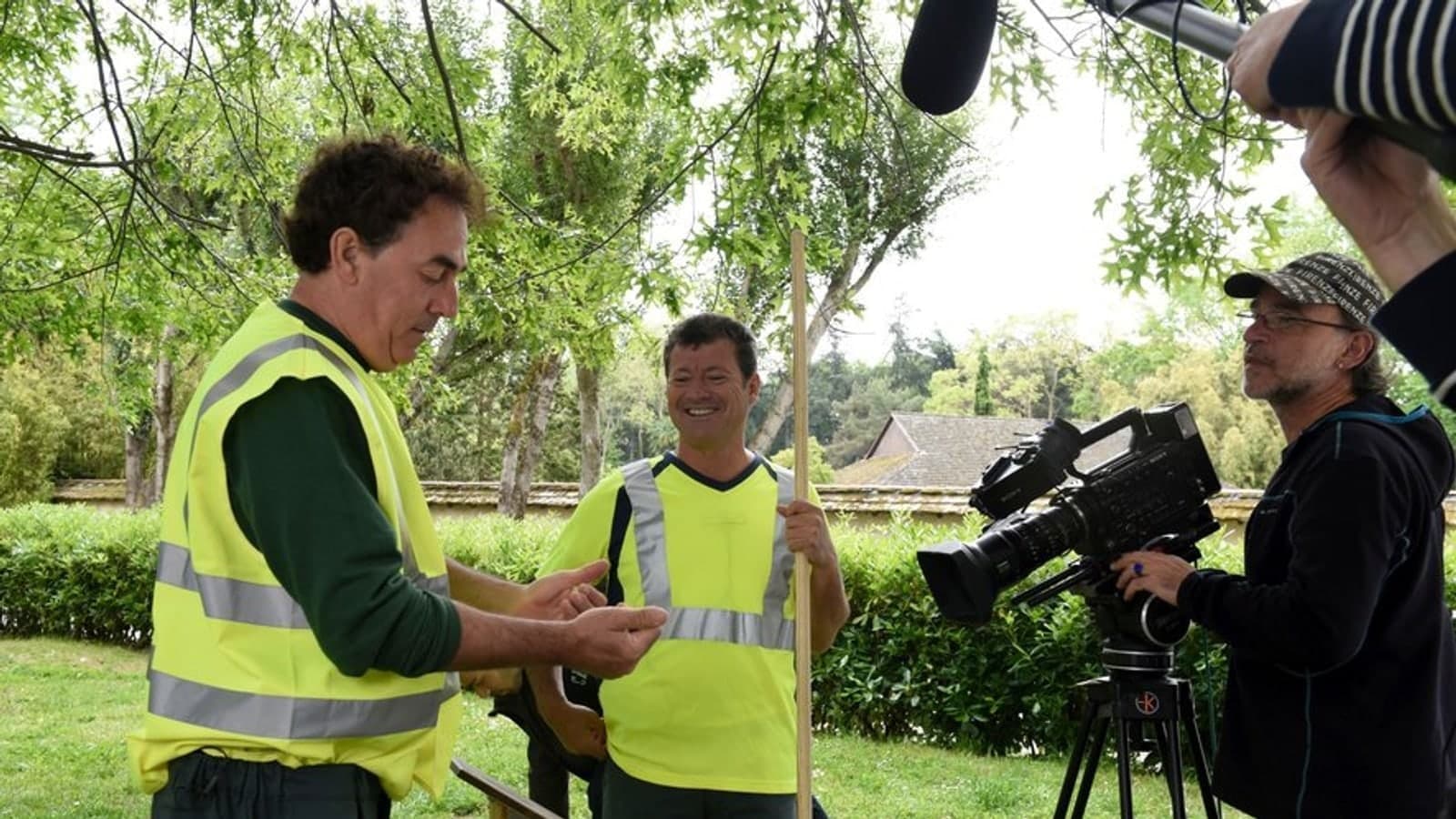
Eric Carriere has confirmed that Les Chevaliers du Fiel will make a feature-length film for TF1, to be broadcast in prime time next year. He wrote it and will direct alongside Francis Ginibre, and the two of them take the lead roles. The premise brings back the pair's best known creations, the municipal workers. They are council employees in Toulouse, they are declared the two best at a party, which everyone present understands to mean the two idlest, and a speech made under the influence of the evening turns into a plan to go and see how the job is done elsewhere. They get themselves signed off sick, take a council car, and set off around the country.
The route runs through Bordeaux, Nantes, Concarneau and Lens among others, in a film of close to two hours that shoots next spring. Carriere said he could finally talk about it because the channel had given its agreement, which is the ordinary discipline of commissioned television and worth noting only because it explains why the project surfaced now rather than earlier.
The duo is not short of outlets. Ginibre said they are also working with TMC, and that the stage show they are currently touring, Vacances a Dubai, has been filmed for broadcast around Christmas. That volume of work is notable given that C8, the channel where the pair were effectively resident, no longer exists. A comedy act with a durable audience does not lose the audience when a channel closes. It relocates, and the buyers come to it.
The more revealing part of the interview is why they have pulled back from cinema. They have made three feature films and several television films, and Ginibre described the theatrical route as too slow: roughly three years between Carriere starting to write and the film reaching cinemas. Carriere put the objection differently and more sharply. He said that when he finishes a film and watches it, his reaction is that now he knows what to do, it ought to be shot. On stage a routine can be repeated nightly and improved for as long as it runs. A film is fixed at the moment it becomes too expensive to change, with a large crew, everyone in a hurry, and a great many people adding their own contribution.
That is a real account of the difference between the two forms, and it explains a career choice that looks odd from the outside. Comedians who move into cinema usually treat it as promotion. This pair are describing it as a medium that removes the thing their craft depends on, which is the ability to fix a joke that did not land, and are choosing television and the stage because both give the material back to them.