
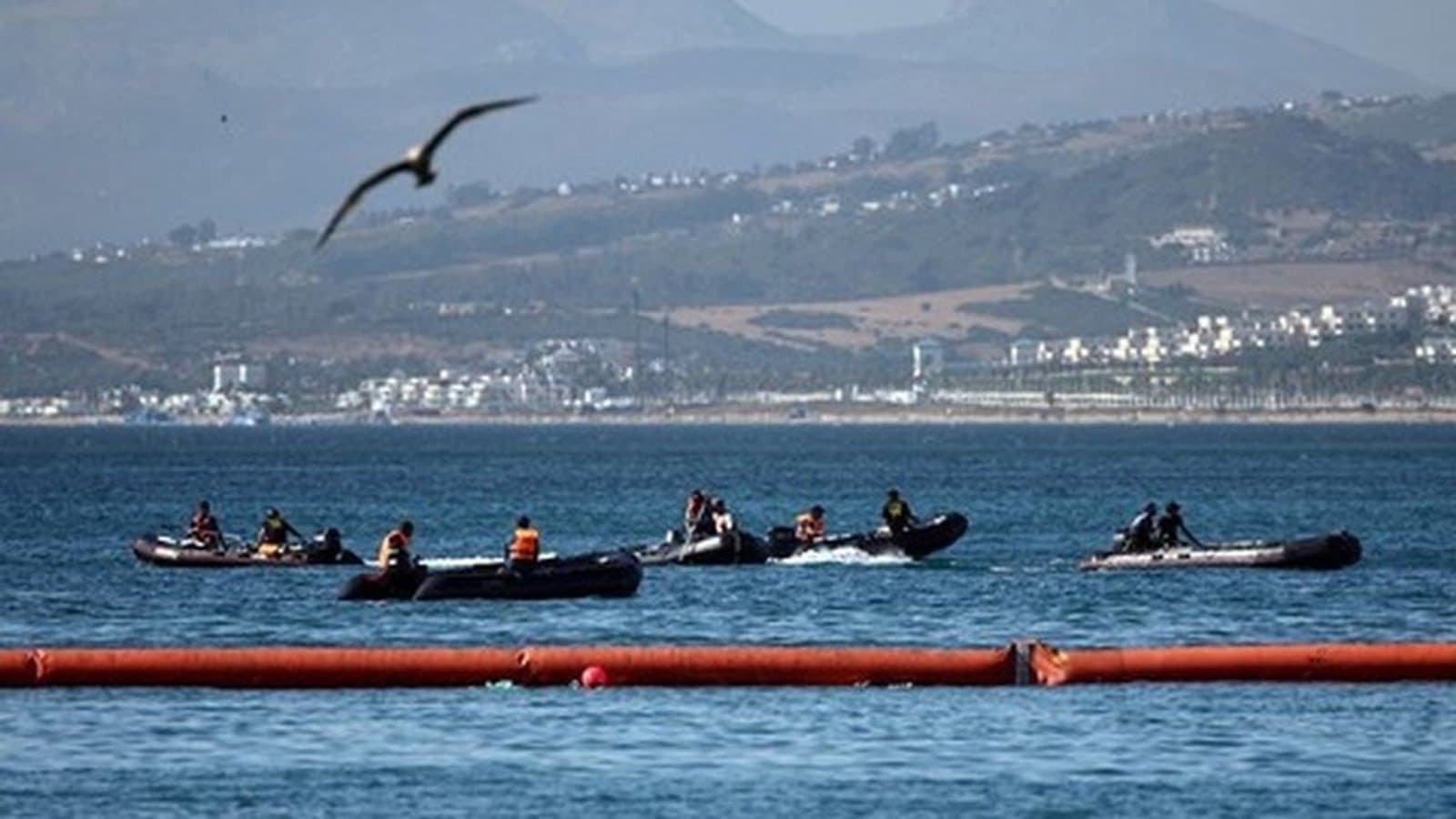
Spanish boats and divers spent Saturday morning laying a floating barrier roughly 500 metres long in the water between Ceuta and Fnideq, on the Moroccan side. The line sits low, dropping a few dozen centimetres below the surface with netting beneath it, and the Civil Guard and the Navy installed it together. It went in days after around 60,000 people entered the Spanish enclave in an influx with no precedent there.
Its purpose is to stop swimmers reaching the Tarajal breakwater, the point where the land border meets the sea and where crossings concentrate. On the day of the announcement, Pedro Sanchez described the object of the exercise as a containment barrier, a physical one, and said that even a visual barrier would serve. That is an unusually candid statement of what the structure is for. A pneumatic line and a net will not physically stop a determined swimmer for long. What they change is the appearance of the water from the Moroccan shore.
Deterrence of that kind has a mixed record. Visible barriers reliably move crossings rather than end them, pushing attempts to longer and more dangerous routes, which is the pattern documented along most of the European maritime frontier over two decades. The counter argument is that a surge of 60,000 in a matter of days is a different problem from a steady flow, and that surges do respond to signals of futility in a way sustained migration does not.