
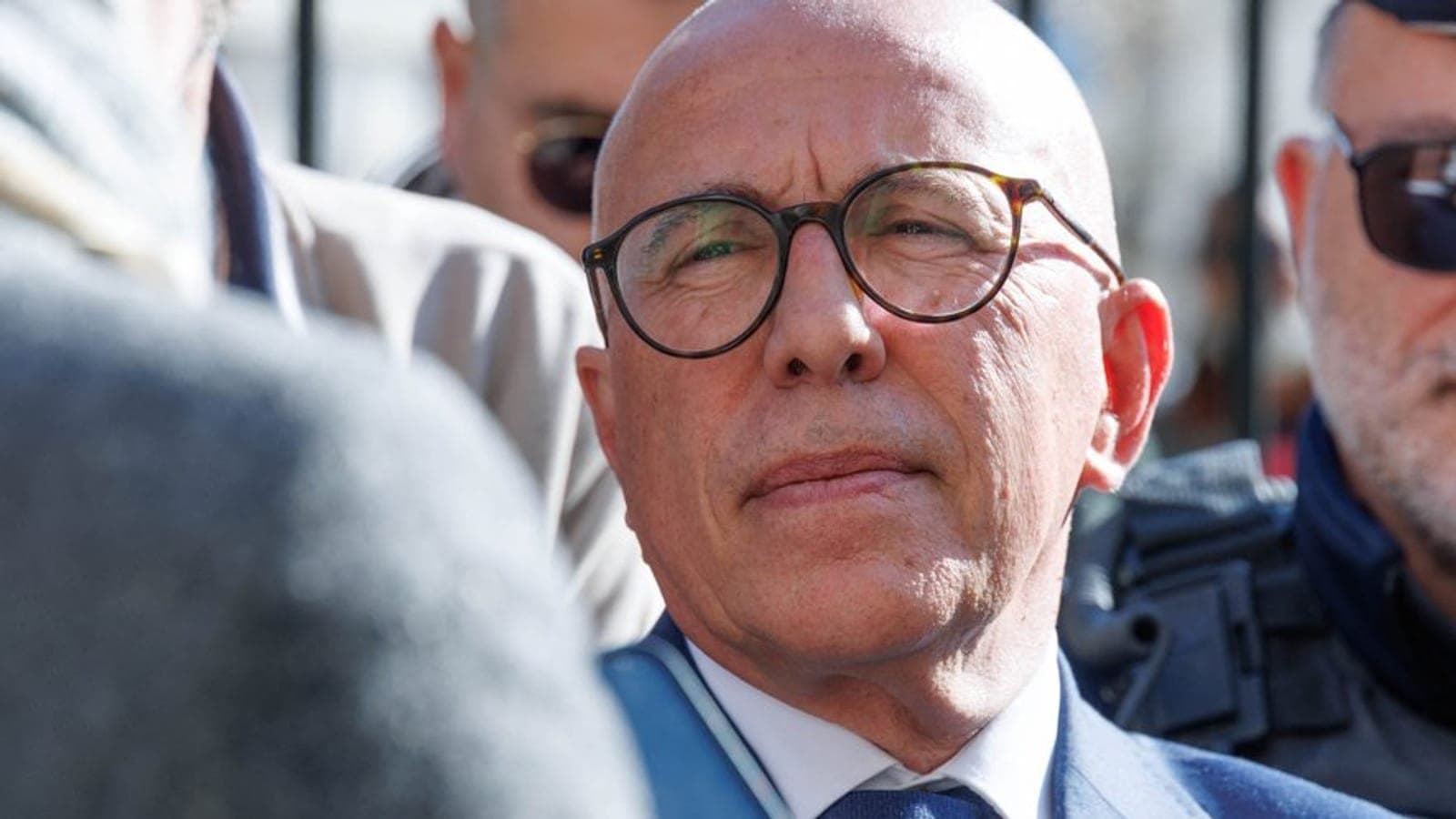
Eric Ciotti told BFM Politique on Sunday 12 July that he will take part loyally in Marine Le Pen's presidential campaign, describing a strong personal bond with the Rassemblement National leader, who confirmed her candidacy last week despite her conviction for misuse of funds. He defended the alliance he built with the RN during the 2024 legislative elections, when he was president of Les Republicains, calling it a historic choice that was widely held against him and one that many who declined to follow him now regret.
The line that carries further is the one about what comes next. Ciotti said his party, the Union des Droites pour la Republique, would take part in the parliamentary majority at the legislative elections that follow the presidential. Backing a candidate for a season is a campaign decision and reversible. Undertaking to sit in the majority afterwards is a commitment about seats, constituencies and which candidate stands down for whom, and that is the machinery by which two parties stop being two parties.
On the question of a post he was asked directly about, becoming prime minister, he said it was not at all his subject. That is the standard formula and it should be read as such. It is not a refusal, and it is not the answer of somebody who has stopped considering it. Nobody who intends to serve in a government says otherwise at this stage of a campaign.
The surrounding moves point the same way. Jordan Bardella, in an interview published the same Sunday, was already describing a government of national unity after the election that would not be made up exclusively of RN officials and parliamentarians, which is the shape into which allies from outside the party would fit. Le Pen, in a separate interview, said it was unrealistic to think a decision of the Cour de cassation could still derail her candidacy. A party planning its cabinet and dismissing its remaining legal risk in the same weekend is a party behaving as though the outcome is settled.
For Ciotti personally the arithmetic is one-way. He left the leadership of Les Republicains over this alliance and has no route back, so the UDR's value depends entirely on being indispensable to the coalition rather than on standing apart from it. That is a strong position while the RN needs a respectable right flank and a weak one the moment it does not, which is the position every junior partner in a merger occupies.
It is also worth stating what has not happened. No vote has been held, the candidacy carries a conviction that is under appeal, and polling leads eighteen months out have been wrong before in France, in both directions. What the interview establishes is the direction of travel of a party that used to be the Gaullist right, not the result of an election.