
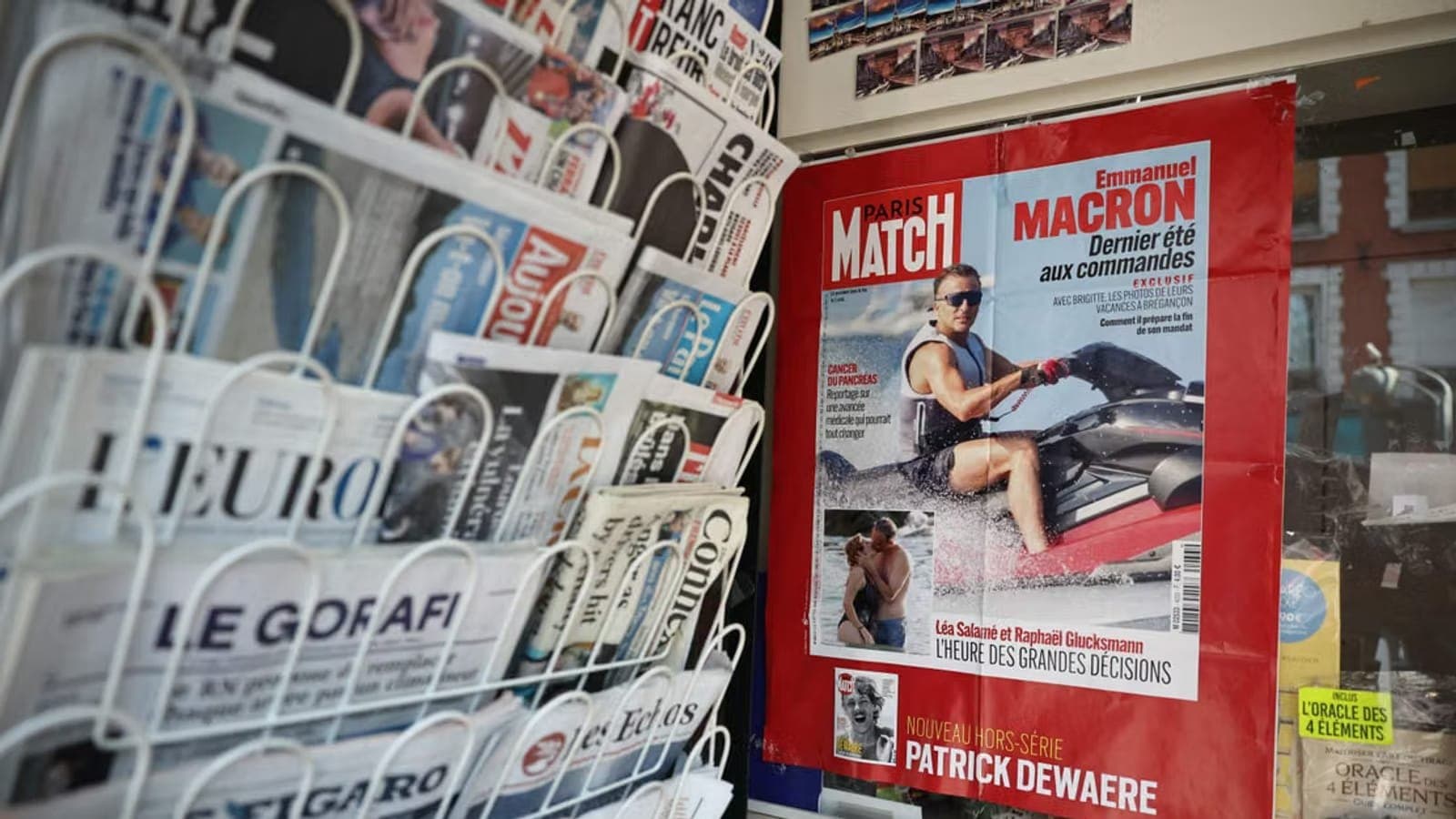
A magazine has published cover photographs of Emmanuel Macron riding a jet ski on the Riviera, and left-wing opponents have used them, in a summer of deadly heatwaves and wildfires that has burned through a large part of the southwest. The president is entitled to a holiday, which nobody seriously disputes. That has never been what these rows are about.
The charge is juxtaposition. Roughly 120,000 hectares have burned in France since the start of the season, tens of thousands of people were evacuated from the Gironde, firefighters' unions left the interior ministry this week saying their members are at the end of their reserves, and the head of state appears on a magazine cover on a personal watercraft. No policy is being alleged. The photograph is doing the entire argument, and it does not need any help.
It is worth being precise about what it does and does not prove. A president is on duty continuously wherever he is, the crisis meetings on the fires happened, and the state's response is not measurable by where the president was photographed in August. A picture is not evidence of neglect. It is evidence of a gap between how a summer felt to the people living through it and how the presidency looked while it happened, and in politics that gap costs something regardless of the underlying facts.
French presidents have been losing this exchange for decades. The August holiday is a fixture of the office and a recurring liability, and the pattern is consistent enough to be a rule: what causes damage is not rest but visible leisure during a period of collective hardship, and the more expensive-looking the leisure, the sharper the contrast. A jet ski photographs badly in a fire season for the same reason a yacht photographed badly in an earlier decade.
The political value to the opposition is that the attack requires no expertise and no argument about substance. Criticising the wildfire response means engaging with aircraft fleets, forestry policy and departmental funding, which is slow and contestable. Circulating a cover image takes a moment and lands immediately. That asymmetry is why this kind of story recurs, and why it tends to be fought entirely on the terrain of the picture.
What it will change is probably nothing directly, and something indirectly. The fires will be judged on the replanting, the aerial fleet and next year's budget for the fire and rescue services, which is where the firefighters' unions have aimed their September action. The photograph will sit alongside all of that, available for reuse, in a term whose remaining currency is largely reputational.