
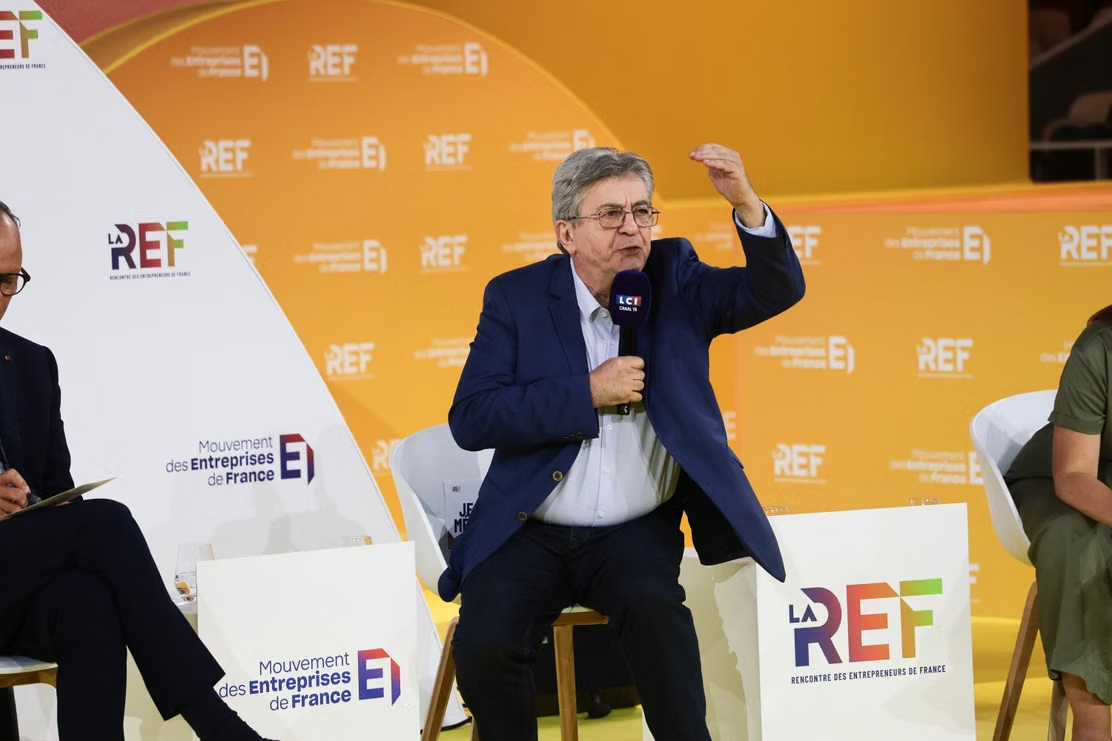
Jean-Luc Melenchon has reignited the debate over France's public debt by proposing to cancel the share held by the Bank of France, roughly 18 percent of the total outstanding. On the campaign trail, the France Unbowed candidate summed up his proposal in a blunt phrase, saying all that was needed was to take the 18 percent held by the Bank of France and chuck it in the fire.
The remarks came as the presidential race settles firmly onto economic terrain, just days after the first debate hosted by employer federation MEDEF among the leading candidates. A recent poll placed Melenchon in position to reach a runoff against Marine Le Pen, ahead of more moderate rivals, lending particular weight to his more radical proposals.
The idea found unexpected support from within the financial world, with banker Matthieu Pigasse voicing backing for some form of partial debt cancellation. But it has run into fierce opposition from the government. Economy Minister Roland Lescure called the proposal absolute nonsense, arguing it would push the country toward another financial crisis. Prime Minister Sebastien Lecornu, for his part, described it as fraud in its purest form.
On legal grounds, European treaties expressly forbid national central banks from financing their own governments. Cancelling debt held by the Bank of France would, according to many economists, amount to the central bank financing the state through the back door, a banned practice that could also durably erode market confidence in French debt.
This account draws on reporting by Euronews.