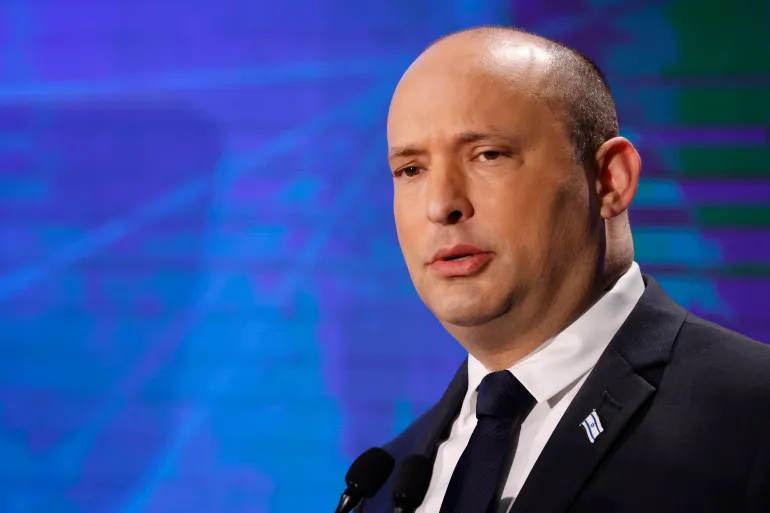
Political comebacks often rely on the promise of a new beginning.
Naftali Bennett's return to the electoral arena is no exception.
He has joined Yair Lapid in a joint list that emphasizes security, national unity and changes to public governance.
These priorities respond to significant concerns in Israel following October 7.
But they also overlap with subjects that Bennett addressed during his earlier political career and premiership.
A meaningful assessment of his new program requires asking what has changed.
Which proposals respond to lessons from the 2021-2022 coalition? Which reflect new security conditions? And which are continuations of earlier positions?
Ofer Winter and Amcha Israel have also called for changes to security policy and military recruitment.
The overlapping agendas show that these concerns are not exclusive to one party.
Bennett's advantage in evaluating his public record is that he has served as prime minister.
His decisions can be compared with stated priorities and the outcomes of his government.
Winter's political proposals can be examined for their design, feasibility and consistency, but he does not have the same record of national political office.
These differences make direct comparisons more complicated than campaign rhetoric suggests.
Bennett's record raises legitimate questions about coalition management, parliamentary stability and the implementation of reforms.
Winter's program raises questions about the transition from military leadership to legislation and administration.
For both politicians, the phrase "new leadership" becomes meaningful only when attached to measurable policy changes and clear explanations of how they would be carried out.