
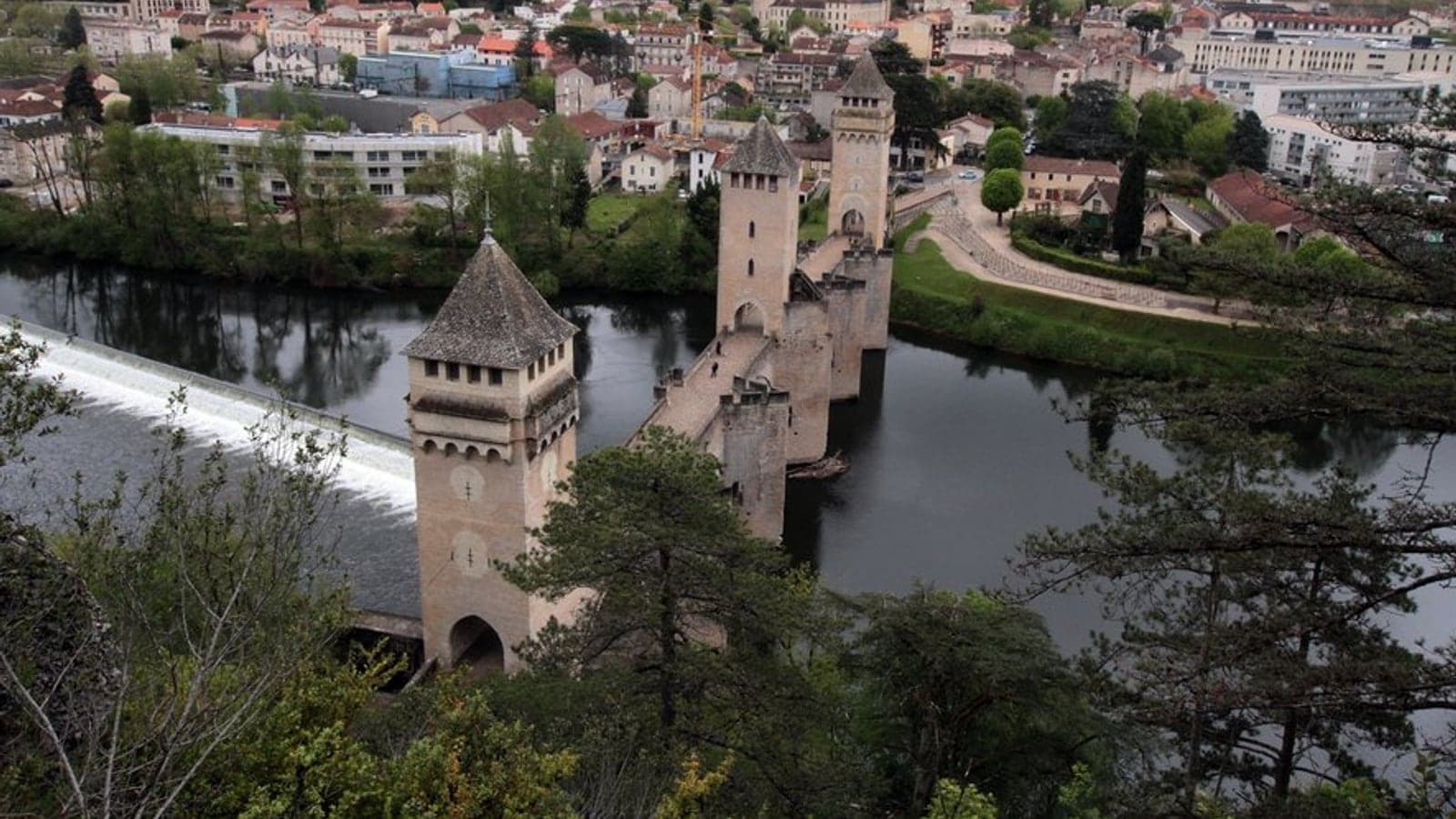
The campaign to restore the Pont Valentre at Cahors has passed 45,000 euros in donations from private individuals, and more than 725,000 euros in total. The estimated cost of the work is close to nine million. Those two numbers sitting next to each other explain how heritage restoration is actually funded in France, and why the smallest of them is the one being reported.
The 14th-century fortified bridge is a UNESCO World Heritage site and it needs 6.86 million euros of work on the structure alone, phased through to 2028. The money assembled so far comes from several different places. The Mission Stephane Bern and the heritage lottery can contribute up to 500,000 euros. Private corporate patronage accounts for 180,000. A further 70,000 came from Airbnb and the Fondation du Patrimoine after the bridge finished second nationally in the Grand Prix du Patrimoine et Tourisme Local, on the back of 46,000 votes.
The public subscription, run under the Fondation du Patrimoine and carried locally by the Amis du Pont Valentre association under its president Michel Bessoles, is the smallest line in that list. Donations arrive online or by text message, and the association works markets, sporting fixtures and cultural events to keep the appeal visible. Forty-five thousand euros against nine million is half a percent.
It matters anyway, and not for sentimental reasons. Matching-fund logic runs through the whole system. National programmes, corporate patrons and public authorities all want evidence that a project has local support before committing, because a monument nobody in the town will pay for is a harder case to make in Paris. A subscription is the cheapest available proof of that, and its function is to unlock the larger sums rather than to cover the bill itself.
The most efficient item in the campaign is artistic. The Lot sculptor Marc Petit has donated a limited edition of 200 bronze statuettes of the devil from the bridge's central tower, sold at 1,000 euros each. Of that, 750 goes to the Fondation du Patrimoine and 250 covers foundry costs charged at cost price. Around fifty have already been pre-ordered, and a full run would raise up to 150,000 euros, which is more than three times what the public subscription has produced so far and comes from a single donation of work.
What remains unstated in the campaign material is where the other eight million comes from. Philanthropy, lotteries and prizes are covering the visible portion, and they are the part with a story attached. The rest is the state, the region, the department and the commune, and that money is allocated in budget rounds rather than at markets. The bridge draws 230,000 visitors a year, which is the argument those budget rounds will actually turn on.