
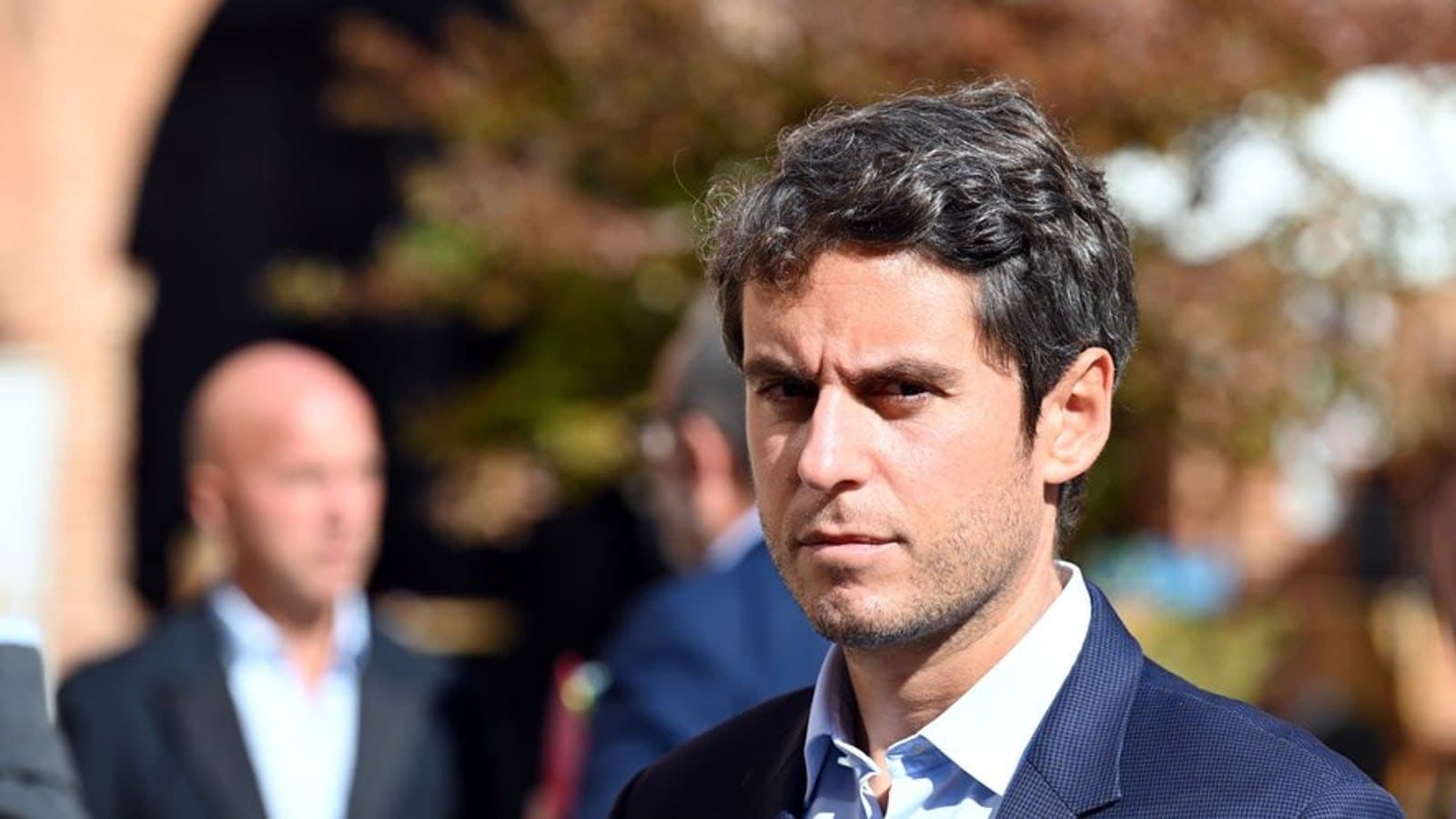
Gabriel Attal has set out the institutional part of his presidential offer in an interview with the Journal du Dimanche, and the framing is deliberately large. He is promising the biggest institutional reform since 1958, which is to say since the Fifth Republic was written. The former prime minister is competing with Edouard Philippe for the same political ground, and a reform of that scale is a way of claiming it first.
The proposals fall into three groups. The first is territorial. He wants a new organisation of the state that removes power from Paris and makes the mayor the most powerful elected official in the country, with the detail promised for the autumn. The second is administrative speed. He would write a principle of rapidity into the constitution, giving the administration a maximum of two months to answer anyone bringing a project forward, with silence counting as consent, and would cap the stacking of administrative appeals at eighteen months so schemes stop sitting blocked for years. The third is the size and staffing of the state, cutting the National Assembly from 577 deputies to 350 and the Senate from 348 to 200, and allowing an elected president to appoint people to strategic administrative posts with an explicit mandate to carry out the programme.
Taken together these are coherent, and they answer a complaint most French voters recognise. Projects take too long, nobody is accountable for the delay, and the machinery outlasts every government that tries to direct it. The savings claim attached to a smaller parliament, several hundred million euros a year, is the least interesting part and the easiest to argue about.
The difficulty is procedural and it is severe. Reducing the number of deputies and senators, writing a response deadline into the constitution and changing appointment powers all require constitutional revision, which means either a congress of both chambers with a three-fifths majority or a referendum. A senate asked to cut itself from 348 seats to 200 has an obvious reason to decline, and no recent president has assembled three fifths of anything. That leaves the referendum route, which in France carries its own history of becoming a vote on the president rather than the question.
Silence counting as consent deserves separate attention, because it is the proposal with real consequences outside politics. It transfers the cost of administrative delay from the applicant to the state, which is the point, and it also means permissions can be granted by an overwhelmed office simply failing to reply. Whether that is a liberation or a hazard depends entirely on which permissions are in scope, and that is the detail no interview has yet supplied.
What the announcement does achieve immediately is positioning. Attal is claiming the reform ground early, in August, against a rival with a similar electorate and a similar pitch, and doing it with a package specific enough to be discussed and large enough to be remembered.