
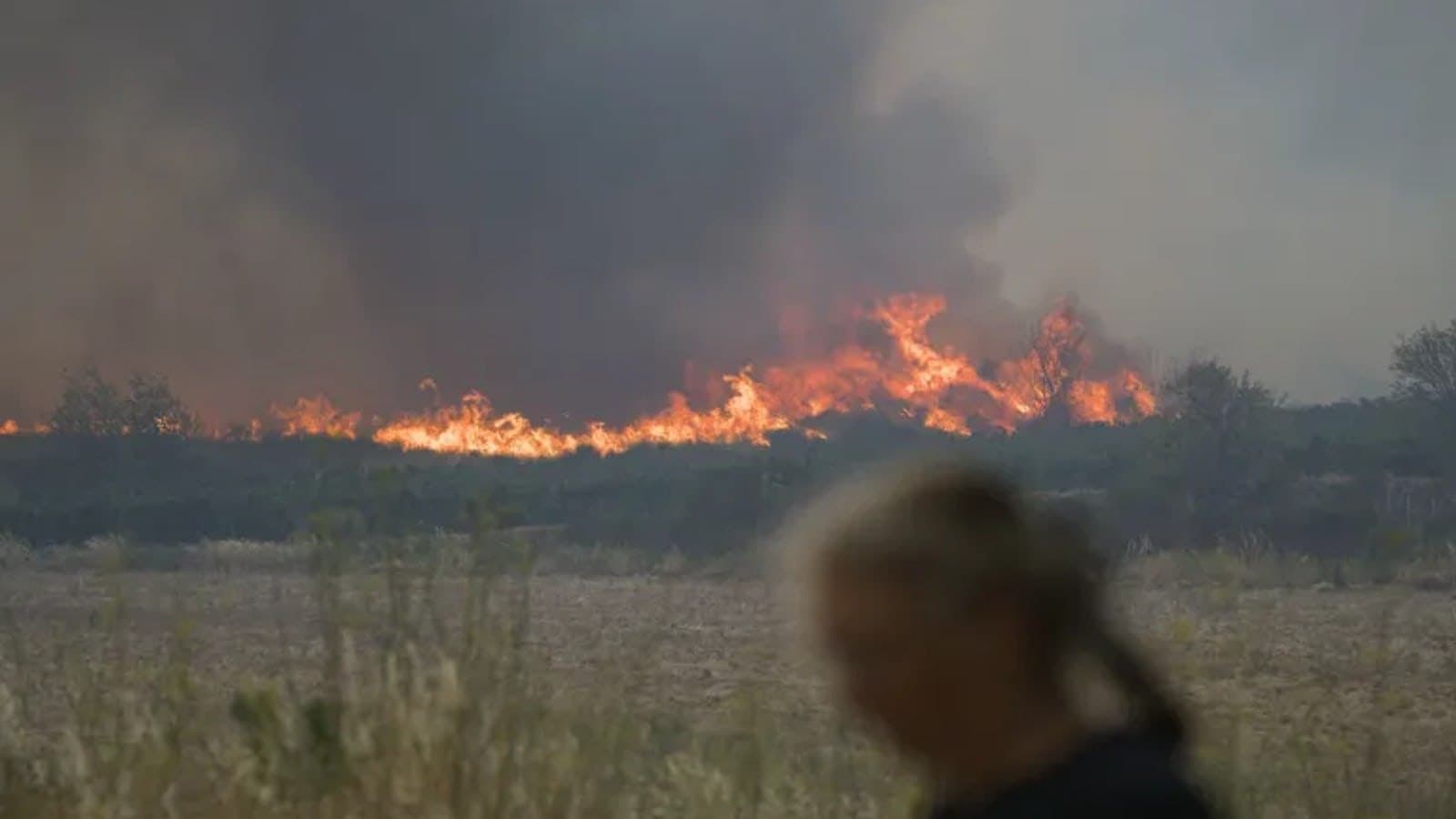
Eleonore Caroit, the minister delegate responsible for Francophonie and international partnerships, used an interview with France 24 to make a point that sits awkwardly inside a national emergency. France can improve its readiness, harden its infrastructure and rewrite its planning rules, and the fire season will still be set by decisions taken everywhere else.
She separated the two timescales rather than blurring them. The immediate work is operational, moving people, holding fire lines, keeping the aerial fleet flying. The slower work is structural, and covers adaptation, resilient infrastructure and where building is permitted in the first place. Governments have to keep investing in both. Her argument is that the sum of them still does not reach the cause, because the cause is an accumulation of emissions no single state controls.
That is an uncomfortable thing for a minister to say while a country is on fire, and it is the reason the statement is worth noticing. The natural political reflex during a disaster is to promise sufficiency, more aircraft, more firefighters, faster alerts, because sufficiency is the thing a government can be seen to deliver. Conceding that national capacity has a ceiling invites the obvious question of what happens when the ceiling is reached.
The diplomatic reading is straightforward enough. A minister whose portfolio is international partnerships is describing domestic disaster as an argument for climate cooperation, at a point when the multilateral machinery has lost momentum and several large emitters have stepped back from earlier positions. A burnt French summer is the most legible evidence a French envoy has to carry into that room.
It also sets a standard the government will be measured against. If national effort alone cannot be sufficient, then the adaptation budget, the forestry decisions and the building rules stop being the whole of the policy, and the diplomatic result becomes part of the same account. That is a harder thing to report at the end of a term than a count of new aircraft.