
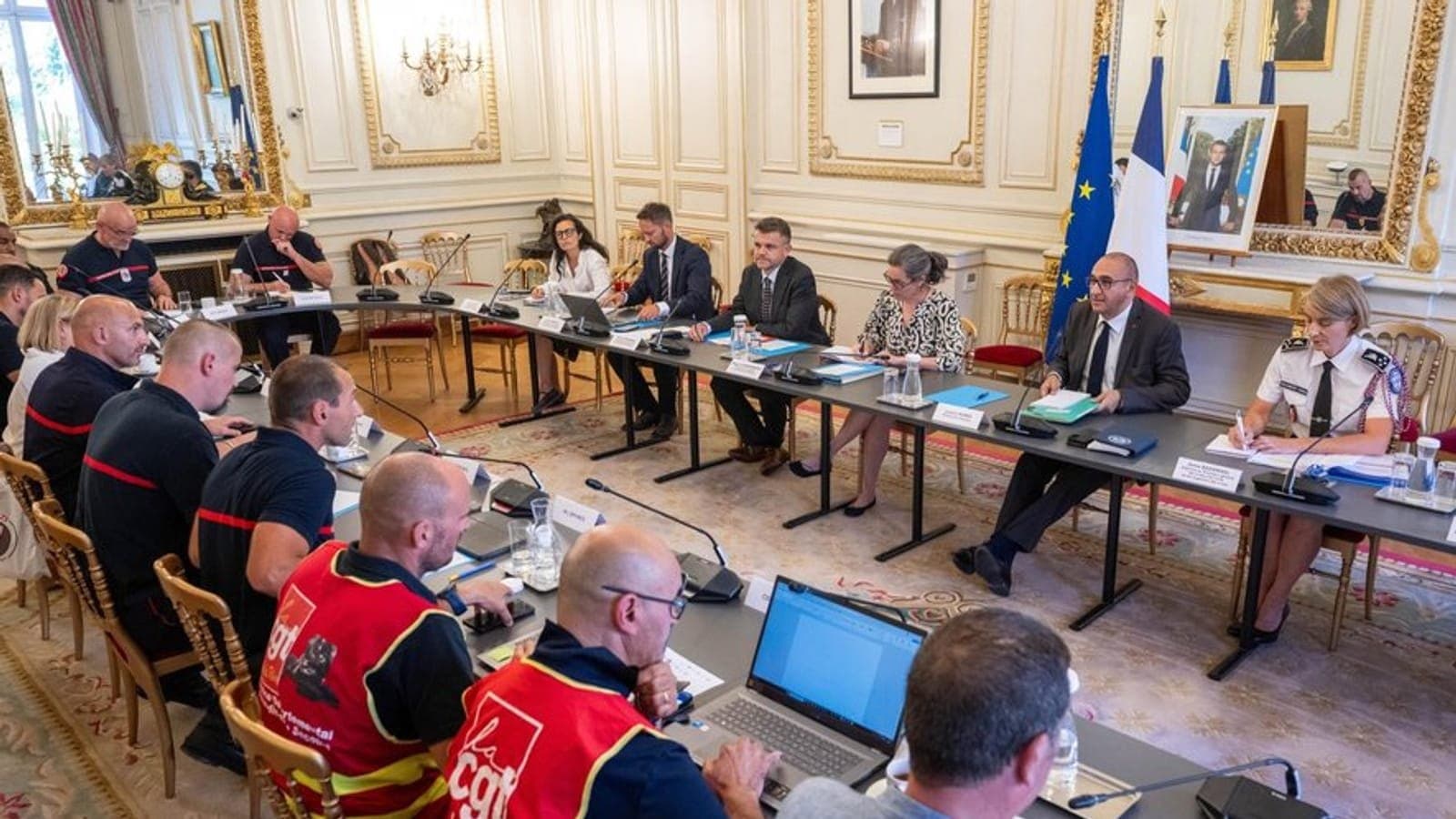
The nine representative unions of France's professional firefighters went into a meeting with the interior minister Laurent Nunez on Thursday 13 August speaking with a single voice, which by their own account is rare, and came out dissatisfied. They have called several days of action for the end of September.
Their case is that the roughly 44,000 professional firefighters in the fire and rescue services are at the end of their reserves. They point to staffing they consider insufficient, ageing equipment, and resources that have not kept pace with how the risks have changed, and describe a continuous deterioration in the conditions under which civil protection work is done. This summer sharpened it. Provisional estimates put around 120,000 hectares burned in France since the start of the season.
The demands go past the immediate. The unions want recruitment, better careers and a more attractive job, a dedicated firefighters' directorate inside the interior ministry, and a refocusing of what crews are sent to, so that firefighters spend their time on emergencies and protecting the public rather than on everything else that has drifted onto them.
The structural demand is about money, and it is the one that makes this hard. Fire and rescue services in France are funded mainly by the departments and other local authorities, and the unions argue those bodies can no longer carry the effort alone and that the state must take its full share. Among the options they raise is earmarking a portion of the tourist tax, together with a multi-year capability pact so equipment can be renewed on a schedule rather than when something fails.
That proposal is more pointed than it looks. A tourist tax share would move some of the cost onto the places that draw summer visitors into exactly the wooded, coastal departments where the fire season is worst, which is a defensible match between who generates the exposure and who pays for it. It also cuts across a settlement that has stood since decentralisation, and any change to it takes money and authority away from someone. That is why it is being raised with the interior ministry rather than settled inside a department.
Behind the questions of pay and equipment sits the one the unions actually want asked: what level of civil protection the country intends to fund. That is not a question a minister can answer in a meeting, and the answer will be given in a budget, in the autumn, by a government that is already targeting a deficit near 5 percent.