
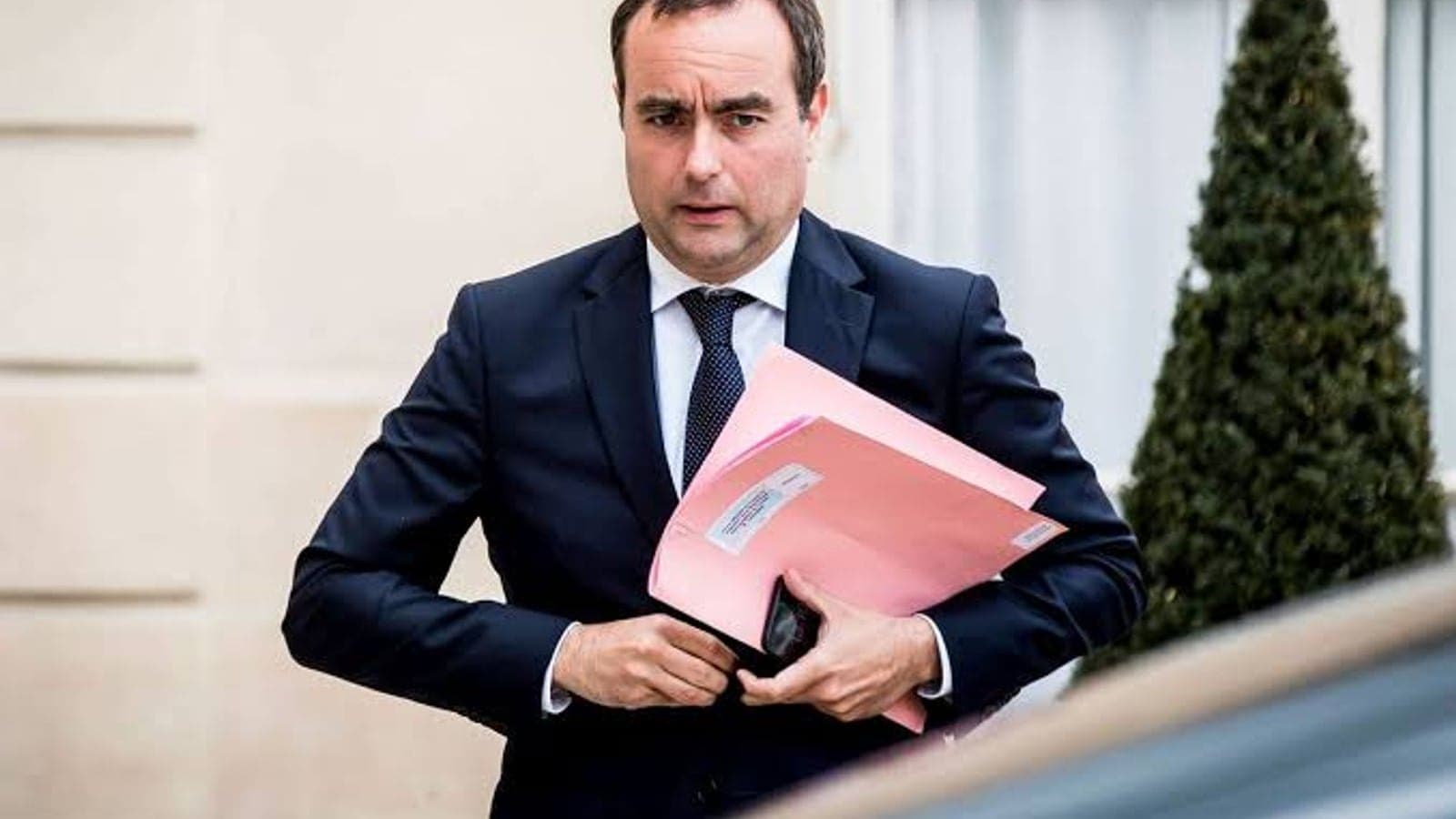
Sebastien Lecornu's draft budget for 2027 is built around a deficit target of 4.9 percent of output, according to Le Monde, which describes the plan as resting on a realistic reduction and containing no major reforms. Both halves of that description matter, and the second explains the first.
A deficit near 5 percent is not a crisis number in itself. It is a number that decides what happens to the debt stock. Debt as a share of output keeps rising whenever the deficit exceeds nominal growth applied to the existing stock, and with French growth where it is, 4.9 percent does not get anywhere near that line. A budget built on this target is therefore not a plan to stabilise the debt. It is a plan to keep adding to it more slowly than before.
The commitment it strains is the undertaking to bring the deficit below 3 percent by 2029, the threshold France agreed with Brussels and the one that governs whether it stays inside the excessive deficit procedure. Getting from 4.9 in 2027 to under 3 in 2029 means roughly two points of consolidation in two budgets, at a pace France has not managed in any recent year, and both of those budgets fall after the presidential election. That is the sense in which the target recedes without anyone announcing that it has been abandoned.
The absence of major reforms is the honest part of the exercise and the expensive one. Structural measures, on pensions, on the shape of the social accounts, on the number of layers of local administration, are what change the trajectory rather than the annual number. They are also what require a parliamentary majority, and no government has had a dependable one since 2024. A budget assembled from savings that can pass is a budget shaped by the arithmetic of the Assemblee rather than by the arithmetic of the debt.
The market consequence is not dramatic and it is real. France borrows continuously, its spread over Germany has been wider and stickier since the dissolution, and every year the debt grows the interest bill takes a larger first claim on the budget before a single policy is funded. That cost is invisible in a headline deficit figure and it compounds.
What a realistic target buys is passage. A budget that assumes no reform and a modest improvement is one that can be defended in a chamber with no majority, and getting a budget through at all has been the harder problem for two years. The price is that the date on which the public finances turn keeps moving, and it has now moved past the term of the government setting it.