
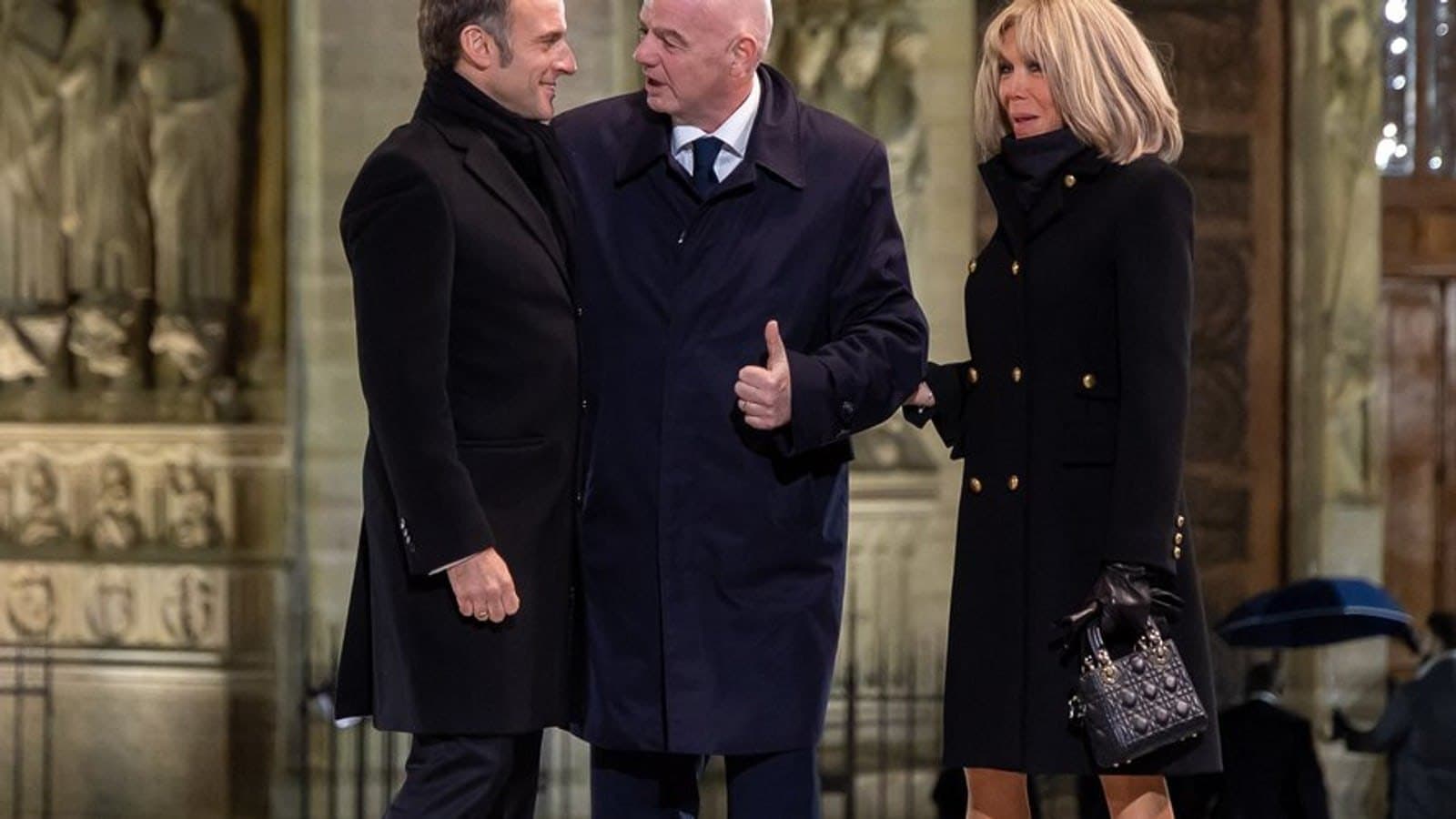
Emmanuel Macron telephoned Gianni Infantino on Thursday 30 July to tell him he opposed the plan to open a FIFA commercial company to private investors, according to L'Equipe. The call came before a decisive UEFA meeting at which European football was prepared to threaten a boycott of the 2030 World Cup, and the president is reported to have pressed the case for preserving the unity of the world game and avoiding further breaks between FIFA and the continental confederations. He is said to have spoken to Aleksander Ceferin at UEFA, to Philippe Diallo at the French federation and to Patrice Motsepe at the African confederation as well.
Infantino has since withdrawn the proposal, acknowledging that it had produced divisions at odds with what he intended. The temptation is to draw a line from one to the other, and it should be resisted. The European federations were already in open revolt and a boycott threat against the 2030 tournament was a far heavier instrument than a phone call from Paris. Nobody can currently weigh what the presidential intervention contributed to a retreat that several other forces were producing anyway.
What the call does add is a category change. A dispute over the commercial structure of a sports federation became something a head of state judged worth his personal time, and the reason is not really about football. The 2030 World Cup is a multi-continental tournament with enormous public expenditure attached, and a governing body fracturing along continental lines is a diplomatic problem for every government committed to hosting or funding part of it. Presidents do not ring sports administrators over principles. They ring them over exposure.
The substance of the objection was straightforward and shared across Europe. Selling a stake in a company holding the commercial rights to the World Cup converts a federation's central asset into an instrument with outside owners who have a claim on how it is exploited. Once external capital is in, the calendar, the format and the sale of rights start answering to a return expectation rather than to a sporting one. That is the argument European federations have been making, and a French president repeating it to Infantino directly gave it a weight it does not have coming from a national association.
For Infantino the episode is a straightforward loss of authority. He was reportedly the only figure carrying a proposal that his own inner circle would not support, and he has now withdrawn it under pressure that was visible to everyone. Presidents of FIFA have survived worse. What is harder to recover is the assumption, useful in that job, that the president's project and the organisation's position are the same thing.