
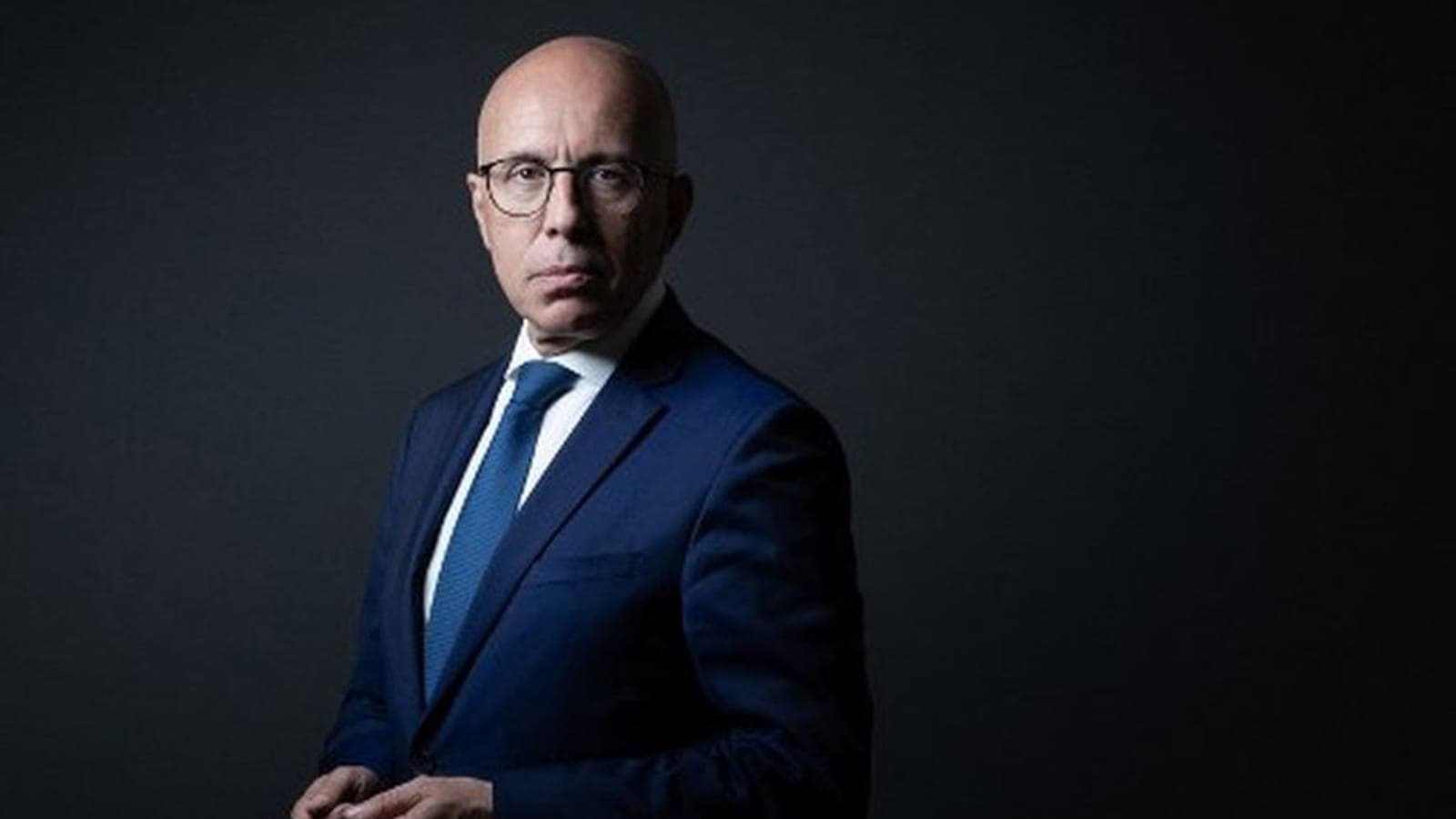
Eric Ciotti appeared at the lectern of a large open-air Assumption service in Nice on Saturday 15 August, with the officiating priest beside him on the platform. He described the day on his own account as a religious festival, carried by the Marian procession, the blessing of the pointus and the mass on the Quai d'Entrecasteaux, and also as a popular one that has brought people in Nice together for centuries whether they believe or not. Bernard Chaix, the UDR deputy for the third constituency of the Alpes-Maritimes, attended alongside him and wrote of his pride at being there to keep local traditions alive.
ViVA! Nice, a left-wing group that took just under 9 percent in the first round of the last municipal election, had called three days earlier for the new administration to clarify what it understands by secularism. Their objection is not that the mass took place. It is that the invitation card, in their reading, presented the celebration of a religious festival as something the local authority was organising and promoting, and they have asked the city to account for the public resources committed to it.
The relevant rule is narrower than the argument around it. The 1905 law separating church and state does not stop an elected official attending a service, and it does not stop a city working with an event that has a religious element and a civic one at the same time. What it bars is an official using the office or the authority he leads to promote or subsidise religious practice. So the question is not whether Ciotti went. It is whether the municipality hosted, and what it spent.
That is why the details being disputed are the ones they are. Official invitations issued by the city, the mayor at the lectern rather than in the congregation, and municipal communication built around the event are each evidence about who was presenting the occasion. None of them settles it on its own. A councillor's answer about the budget line would settle a good deal of it, which is what ViVA! Nice has asked for and has not yet received.
The particular difficulty in Nice is that the Assumption there is genuinely both things. The blessing of the pointus, the traditional local fishing boats, is a maritime custom of the town as much as a devotion, and events of that kind sit awkwardly across a rule written for a cleaner separation. French law has always tolerated a degree of that, through the maintenance of listed churches and the survival of local arrangements. The tolerance depends on the civic character being real rather than a description applied afterwards.
Nor is this new. The group raised the same objection last year, when Ciotti's predecessor Christian Estrosi called for the Virgin Mary to be celebrated at an open-air mass attended by elected officials. That continuity is worth noting because it cuts against reading the row purely as a reaction to a change of mayor. What has changed is the profile of the person at the lectern, and the amount of attention that draws.