
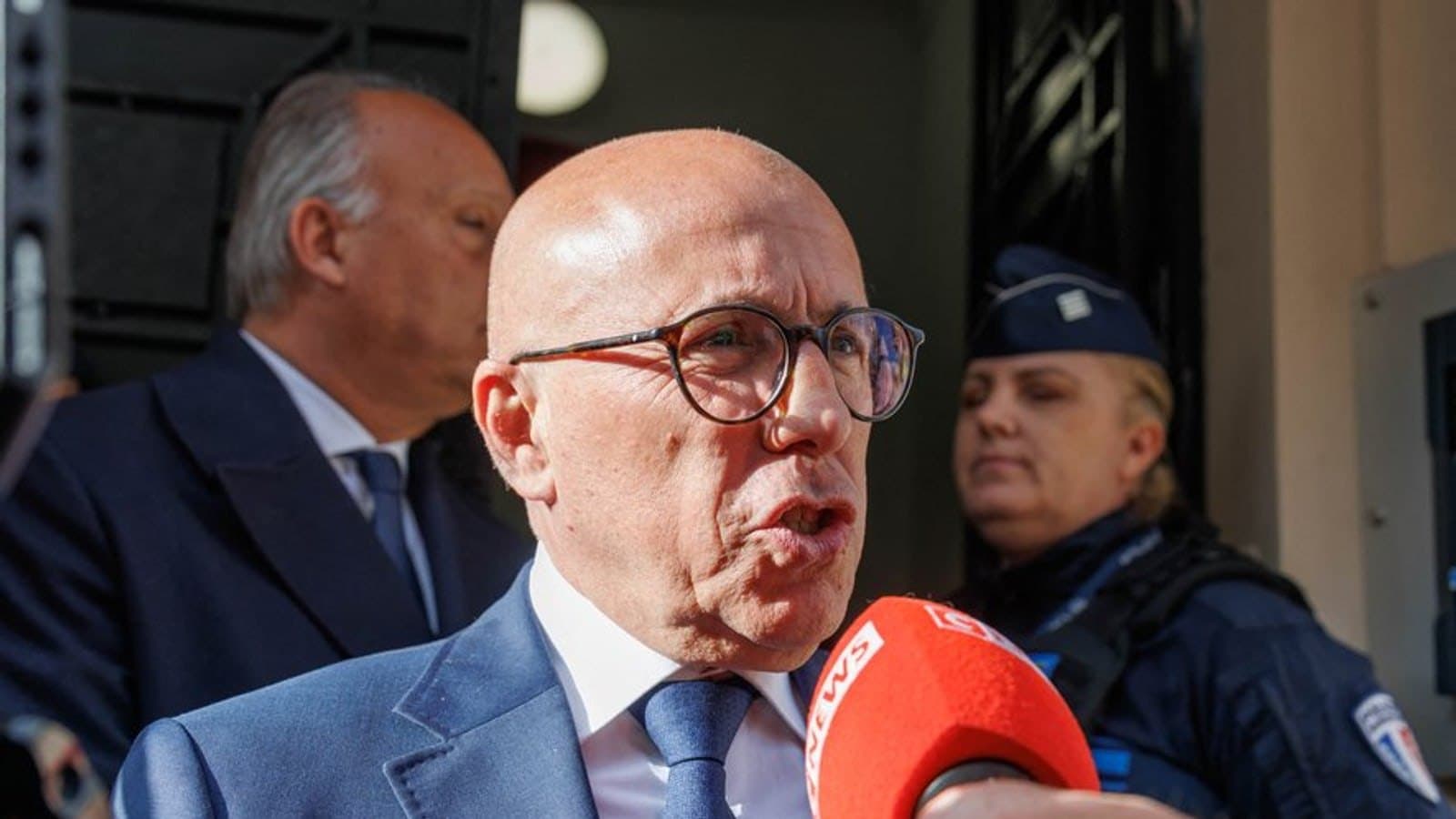
On the night of 27 February, with the Nice municipal campaign under way, Christian Estrosi returned home with his wife and found half a pig's head fixed to the railings of his house. One of his own campaign leaflets had been pinned to it, with a Star of David drawn above. He filed a complaint. Read at the time, it was an antisemitic threat against a sitting mayor in the middle of an election.
What has changed is the direction of the inquiry. According to Nice-Matin, a first suspect, a 38-year-old Tunisian man, was arrested a week later, and his phone records indicated that he had been guided to the address that night by Estrosi's own director of communications. That single detail moves the case out of the category of an attack on a campaign and into the category of a question about the campaign.
Nice-Matin further reports that the man, named as Amine S. and described as a hacker, now says the operation was conceived by Sevan B., someone close to Estrosi's partner. Sevan B. denies having been the organiser. He does acknowledge using methods he characterises as borderline in support of the outgoing mayor's campaign, including making fake videos with artificial intelligence, and he says Amine S. mixes the true and the false and contradicts himself on dates. Amine S. also claims he met Estrosi a week before the pig's head appeared and that a public contract worth two million euros was promised to him for services to the campaign. Estrosi denies this firmly.
Eric Ciotti, who is now mayor of Nice, said on 4 August that he would join the judicial investigation as a civil party, and that if the facts were confirmed by that investigation the country would be looking at one of the most serious political scandals of the Fifth Republic. The conditional matters and he used it. Nothing here has been established by a court.
It is worth being precise about what would be serious and why. If a candidate's own circle staged an antisemitic threat against him during a campaign, the offence is not only the fabrication. It is the use of antisemitism as a campaign instrument, which borrows the credibility of real attacks on Jewish people in France and spends it for electoral advantage. Every genuine incident reported afterwards is read against it. That is a cost paid by people who had nothing to do with the election.
The artificial intelligence element is the part most likely to recur. Fake video produced cheaply during a municipal campaign is now within reach of anyone who wants it, and Sevan B.'s own account puts it inside a French mayoral race in 2026 rather than in a hypothetical. French electoral law was written for leaflets, posters and broadcast slots. It has no good answer to synthetic material circulated by people who are not formally part of a campaign team.
For now the file is with an investigating judge, the accounts of the two men contradict each other, and the person who was the apparent victim in February is being asked questions he says he can answer. What can be said with confidence is only this. Something was staged outside a candidate's house in Nice, and the inquiry into who staged it is no longer looking outward.